Posted by C3W Admin on August 20 2025
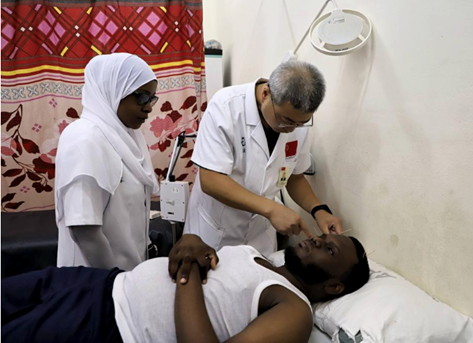
On a February afternoon in 2025, the midday sun burned over Stone Town as I stepped into the outpatient wing of Mnazi Mmoja Hospital, Zanzibar’s largest and oldest medical facility. This visit formed part of my doctoral research on the transnational circulation of traditional Chinese medicine (TCM), particularly acupuncture, as a component of socialist China’s medical aid. A narrow corridor led me into a modest room marked “Acupuncture Clinic.” Outside, patients sat quietly on wooden benches, some fanning themselves against the humid air. The clinic itself was small but neatly arranged, divided by a colourful curtain that ensured privacy. On one side, acupuncture charts from China hung beside stacked boxes of needles, alcohol swabs, and plastic acupoint models. Behind the curtain, six narrow beds lined the walls in pairs. There, Dr. Li Dengke (李登科), a Chinese acupuncturist who had arrived several months earlier, moved methodically from patient to patient, adjusting needles with measured precision. Two local nurses worked alongside him, one of them already applying needles independently.
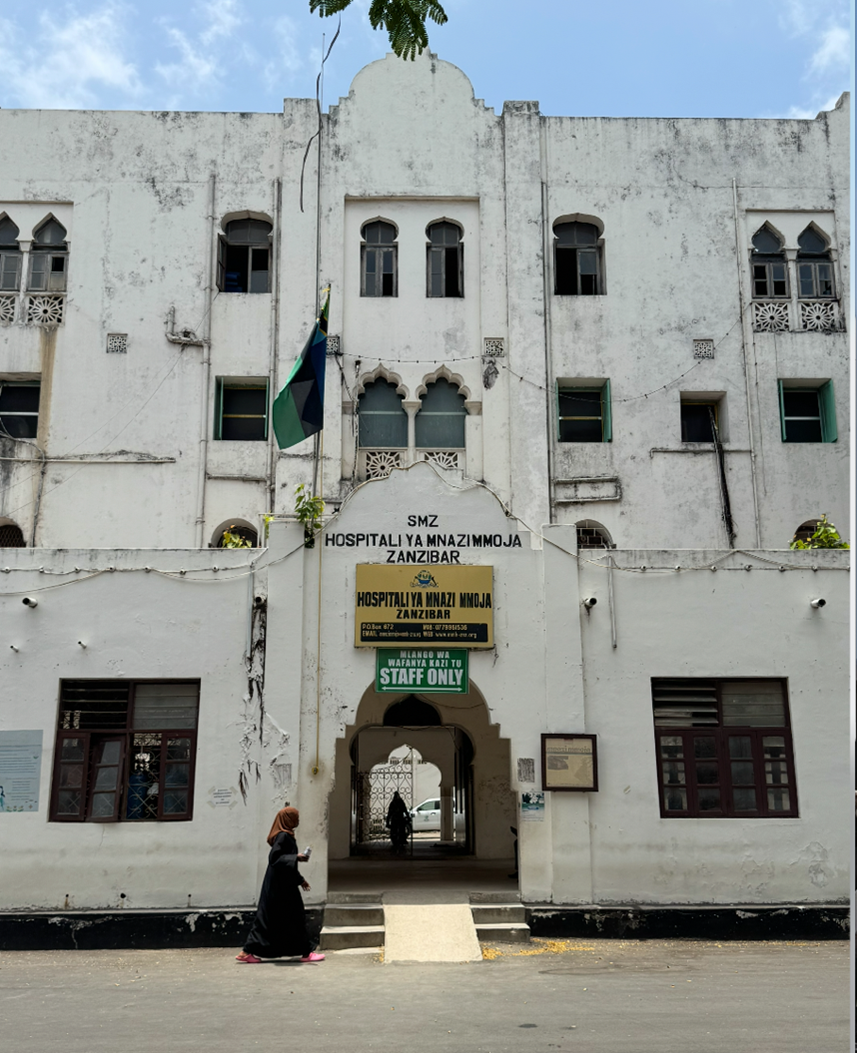
Mnazi Mmoja Hospital
China’s practice of sending medical teams abroad dates back to 1963 when the first batch departed for Algeria. Since then, more than forty African, Asian, and Latin American countries have received Chinese doctors, and the programme continues today. Tanganyika gained independence from Britain in 1961, Zanzibar followed in 1963, and the two states united in 1964 to form the United Republic of Tanzania. In that same year, as the newly established revolutionary government in Zanzibar aligned itself with the socialist bloc, China dispatched its first medical team to the islands; four years later, in 1968, teams began to serve on the mainland as well. What distinguished these missions during the Mao era was the regular inclusion of acupuncturists. Teams were rotated every two years, and at the programme’s height as many as eight Chinese acupuncturists were working in Tanzania simultaneously. Their presence carried more than therapeutic value: acupuncture symbolized a commitment to rural health, self-reliance, and independence from expensive, colonial-era biomedicine. In the ideological landscape of the 1960s and 70s, it represented, as China’s leaders envisioned, a distinctly socialist contribution to Third World development.
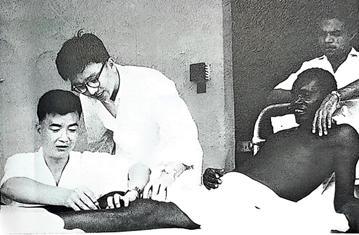
Acupuncture Treatment at Lenin Hospital in 1965
By the 1980s, however, as China shifted under Deng Xiaoping and Tanzania moved away from socialism, acupuncture’s ideological weight diminished. Yet the legacy endured, acquiring new meanings in the post-socialist era. At Mnazi Mmoja Hospital—renamed Lenin Hospital after the 1964 Zanzibar Revolution, then restored to its original name in the early 1990s—the acupuncture clinic established in 1964 has continued without interruption. Every rotation of the Chinese medical team still includes an acupuncturist (since 2017, rotations occur annually rather than biennially). Among the Zanzibari nurses training in the clinic and the patients who pass through it, knowledge of acupuncture seems widespread, and its efficacy is taken seriously. One nurse told me that many patients arrive after exhausting other options: “different patients, stroke, gastritis, neurosis, spondylosis, we have impotence patients, infertility patients, many cases, and they come from all over Zanzibar.” She herself was learning acupuncture under Dr. Li’s guidance and praised it as “very good” and “more natural” than Western medicine. Such narratives of naturalness reflect the long-standing competition between medical systems and, since the 1980s, the growing commodification and therefore the rebranding of “traditional” and “alternative” therapies in global health markets.
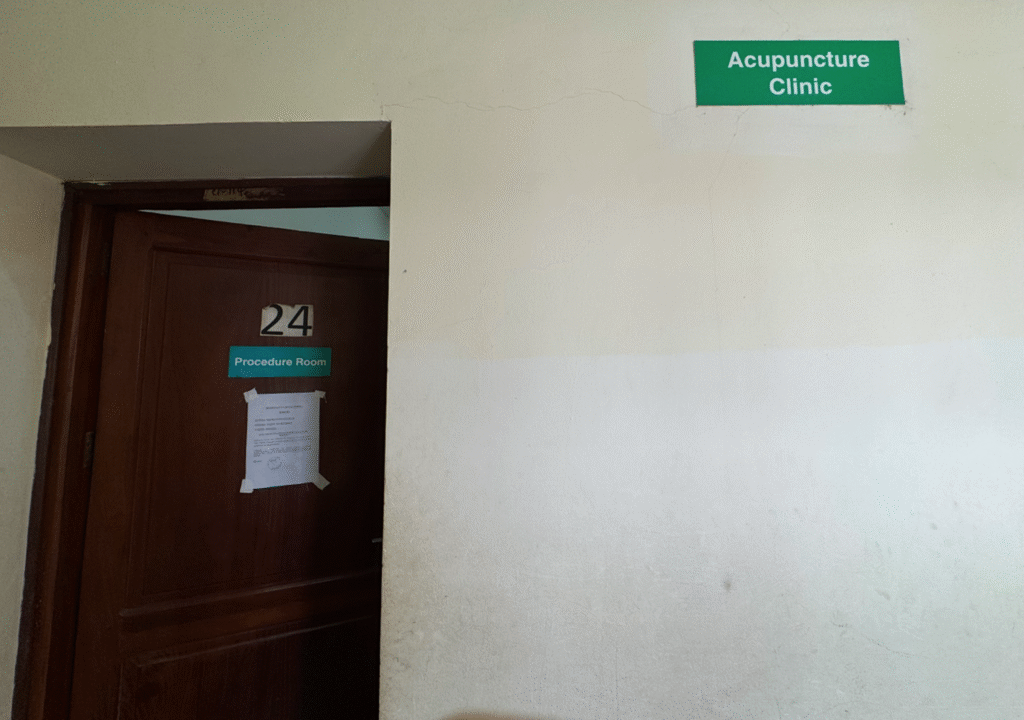
Acupuncture Clinic
In contrast to Zanzibar’s continuity, the acupuncture tradition on the mainland has largely disappeared. In the 1990s, the Chinese medical team attempted to establish an acupuncture ward within the physiotherapy department of Muhimbili Hospital—Tanzania’s largest and most prestigious medical facility—but the initiative drew little enthusiasm from administrators. Today, no acupuncturists are dispatched to the mainland as part of official Chinese medical teams. Instead, however, acupuncture has found a second life in the private health sector, offered alongside other therapies such as Islamic hijama and massage, marketed to middle- and upper-class patients. In Dar es Salaam, I visited several private clinics where a 45-minute acupuncture session cost TZS 60,000—a considerable expense in the local context. This contrast highlights how far acupuncture has moved from its earlier socialist mission. Once embedded in visions of rural self-reliance and egalitarian health, it now circulates as a commodified therapy for those able to pay, reshaped by liberalization and the expanding market for alternative medicine.